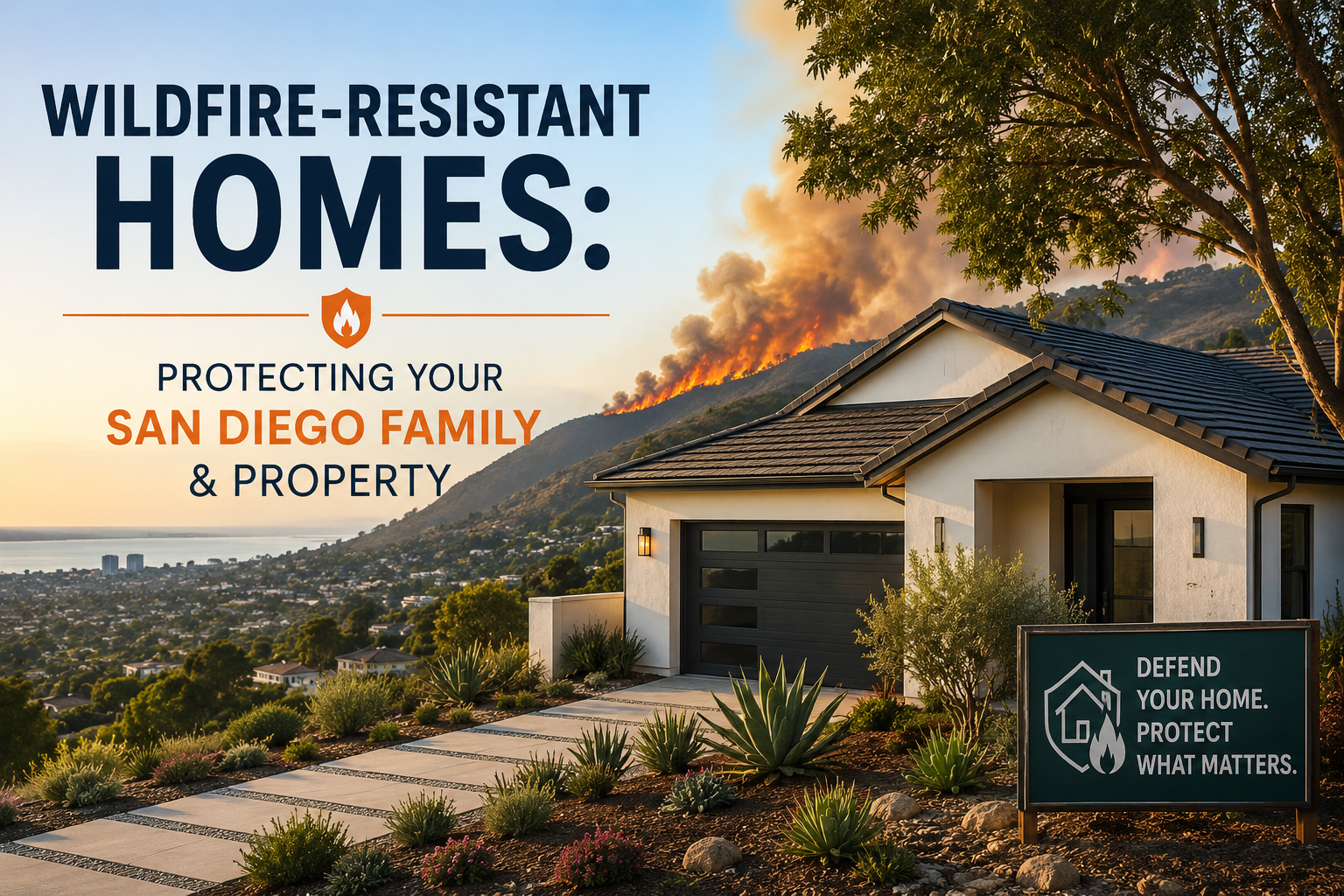
Wildfire risk is a reality for many homeowners across San Diego County. Even if you don’t live directly next to brush or hillside areas, embers can travel miles in strong winds — landing on roofs, entering vents, and igniting vulnerable parts of a home. That’s why more homeowners in San Diego, Carlsbad, La Jolla, Del Mar, Encinitas, Poway, Scripps Ranch, Rancho Santa Fe, and East County are turning to home hardening solutions.
Home hardening involves improving the exterior of your home so it’s more resistant to fire, heat, and wind-blown embers. These upgrades can dramatically reduce the likelihood of a home catching fire during a wildfire event. In this comprehensive guide, you’ll learn what home hardening is, why it matters, which upgrades make the biggest difference, and how to choose the right improvements for your property.
What Is Home Hardening?
Home hardening refers to strategic building upgrades that help your home withstand wildfire exposure. These improvements are recommended by Cal Fire, insurance carriers, and wildfire prevention programs across California. The goal is simple: eliminate weak points where flames or embers can enter or ignite.
Common vulnerable areas include:
- Roofing materials
- Eaves and soffits
- Vents and attic openings
- Siding and exterior walls
- Windows and skylights
- Gutters filled with debris
- Decks and fences made of combustible materials
Upgrading these components strengthens your home’s ability to resist ignition and significantly improves safety.
Why Home Hardening Matters in San Diego County
Coastal communities like La Jolla and Del Mar may feel safe, but strong Santa Ana winds can carry embers well into coastal neighborhoods. Inland areas such as Poway, Rancho Bernardo, Scripps Ranch, Ramona, and Lakeside are even closer to brush terrain, making them higher risk.
In recent wildfire seasons, many homes were lost not from direct flames but from ember intrusion. A single ember landing on a vulnerable roof or vent can ignite structural components.
Home hardening is one of the most effective ways to reduce that risk, and many insurance companies now encourage or require certain upgrades in designated fire zones.
The Most Important Home Hardening Upgrades
Not all upgrades are equal. Some improvements deliver far more protection than others. Here are the essential upgrades recommended by fire safety experts and building codes in wildfire-prone regions.
1. Class A Fire-Rated Roofing Materials
Your roof is your home’s biggest surface — and one of the easiest targets for embers. A Class A fire-rated roof offers the highest level of protection.
Class A roofing materials include:
- Owens Corning fire-rated shingles
- Clay and concrete tiles
- Metal roofing systems
- Fire-resistant composite shingles
If your roof is older, worn, or made of combustible materials, upgrading to a Class A system is one of the most effective ways to reduce wildfire vulnerability.
2. Ember-Resistant Vents
Standard attic vents are often the weakest point in a home because wind-driven embers can easily enter and ignite insulation or attic framing. Ember-resistant vents use fine mesh and baffle systems to keep embers out while maintaining proper ventilation.
Upgrades to consider include:
- Fire-rated attic vents
- Under-eave vents with ember-resistant mesh
- Gable end vent upgrades
For many homes in areas such as Scripps Ranch, Poway, and East County, vent upgrades are highly recommended.
3. Sealed Eaves and Soffits
Open or exposed eaves create a shelf where embers can settle and ignite. Enclosing the eaves or upgrading to fire-resistant soffit materials significantly reduces this risk.
Popular options include:
- Fiber-cement soffits
- Closed eave retrofits
- Fire-resistant plywood coverings
4. Fire-Resistant Siding
Siding materials play a major role in ignition risk. Some materials catch fire easily, while others resist heat and flame.
Best fire-resistant siding options include:
- Fiber-cement siding
- Stucco
- Brick or masonry
- Fire-rated composite siding
Wood and vinyl siding are more vulnerable in high-risk zones.
5. Upgraded Windows and Skylights
Heat can cause standard windows to shatter, allowing embers and radiant heat inside. Double-pane tempered glass windows offer much better protection.
Consider upgrading:
- Single-pane windows to double-pane
- Non-tempered glass to tempered glass
- Old skylights to fire-rated skylight systems
Homes in coastal areas like La Jolla and Del Mar benefit from improved insulation too — making this upgrade valuable year-round.
6. Fire-Resistant Decking and Fencing
Decks and fences often act like fuel during wildfires. Switching to non-combustible or fire-rated composite materials can prevent an outdoor fire from spreading to your home.
In addition, separating fences from the structure with a non-combustible transition (such as metal fencing near the wall) reduces ignition points.
7. Gutter and Roofline Protection
Debris-filled gutters are one of the most common causes of roof ignitions because dry leaves can catch fire immediately when embers land.
Important upgrades include:
- Gutter guards
- Regular gutter cleaning
- Fire-resistant fascia and trim
Gutters should be kept clean year-round, especially in fall and winter months when leaves accumulate.
Home Hardening Benefits Beyond Wildfire Protection
While the primary goal is reducing fire risk, many home hardening upgrades also improve your home in other ways.
Benefits include:
- Increased home value
- Lower long-term insurance risk
- Better energy efficiency
- Longer roof and siding lifespan
- Improved ventilation and attic performance
- More durable home exterior overall
Because these improvements are structural, they provide long-term value for both safety and comfort.
Comparison: Hardened Home vs. Standard Home
| Hardened Home | Standard Home |
|---|---|
| Class A roof materials | Standard or aging roofing |
| Ember-resistant vents | Open vents vulnerable to embers |
| Sealed eaves and soffits | Open eaves that trap embers |
| Fire-rated siding | Combustible wood or vinyl siding |
| Double-pane tempered windows | Single-pane windows |
| Clean gutters with guards | Debris accumulation in gutters |
The difference in risk is dramatic. Hardened homes consistently survive wildfire exposure at significantly higher rates.
Which Areas in San Diego Should Consider Home Hardening?
While every home benefits from home hardening, the following regions have moderate to high wildfire exposure due to vegetation, elevation, and wind patterns:
- Poway
- Scripps Ranch
- Rancho Bernardo
- Rancho Santa Fe
- Ramona
- Lakeside
- Alpine
- El Cajon
- Escondido (certain areas)
Even coastal and suburban areas such as La Jolla, Del Mar, and Solana Beach can be vulnerable because embers travel in high winds.
Why Home Hardening Pairs Well With Roofing or Exterior Renovations
If you’re already planning a roof replacement, siding upgrade, or attic insulation project, it’s the perfect time to add home hardening improvements. With crews already working on your home’s exterior, installation is smoother, cleaner, and more efficient.
Combining upgrades also ensures all exterior components are integrated properly — from vents to soffits to roofing materials.
Why Homeowners Trust Dana Logsdon Roofing & Solar for Home Hardening
With more than 35 years of experience and 30,000+ completed projects, Dana Logsdon Roofing & Solar has been helping San Diego homeowners protect and improve their properties for decades.
The team specializes in:
- Class A roofing systems
- Ember-resistant vent upgrades
- Fire-resistant soffit and trim installations
- Gutter protection systems
- Exterior home efficiency upgrades
Home hardening is a serious investment, and it’s critical to work with a contractor who understands both building science and local wildfire conditions.
Ready to Protect Your Home?
If you’re considering home hardening upgrades or want an expert evaluation of your home’s wildfire vulnerabilities, the Dana Logsdon team is ready to help.
CSLB License: #699151
Main Office: (619) 390-8177
Downtown Office: (619) 870-2221
Email: dana@roofon.com
Your home should always feel safe. Home hardening gives you peace of mind, long-term protection, and the confidence that you’ve taken the right steps to secure your property against wildfire risk.