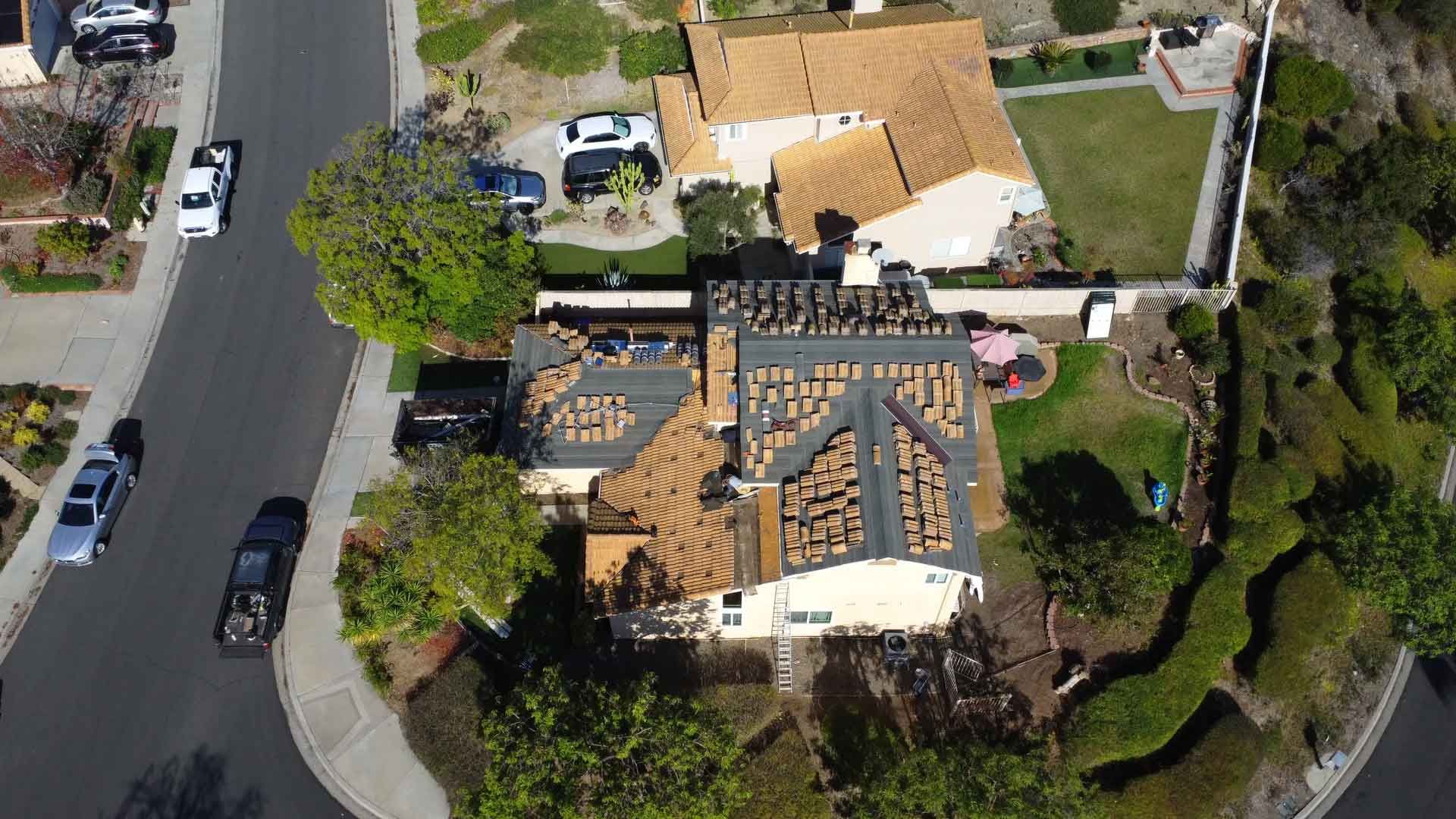
How a Tile Roof Actually Keeps Water Out
Here’s the part that surprises people: tiles are not waterproof by design. They’re a water-shedding armor layer that blocks most rain, UV and impact. Wind-driven rain routinely gets under and between tiles, and that’s expected. The waterproofing job belongs to the underlayment, a membrane of felt or synthetic material laid over the roof deck before the tiles ever went on.
So a tile roof is a two-layer system: tiles handle 95% of the water and all of the sun, underlayment handles the rest and provides the actual seal. When people say tile roofs last 50 years, they mean the tiles. The underlayment was never going to make it that far.
Why Underlayment Fails Around Year 25 to 30
Traditional felt underlayment is asphalt-saturated paper. Decades of San Diego heat cycling bake the oils out of it until it turns brittle, then it cracks at every ridge, fastener and movement point. Once cracked, the wind-driven rain that was always getting under the tiles now has a path to the deck.
The failure pattern is distinctive:
- Leaks appear with no broken or displaced tiles anywhere near them
- Leaks show up in wind-driven storms but not gentle rain
- Leak locations move around from season to season
- Spot repairs work for one storm, then a new leak appears three feet away
That last one is the money pit signature. Patching brittle underlayment is like patching a paper bag. The material around every patch is just as far gone as the spot you fixed.
Relay vs. Full Replacement: What the Fix Costs
| Option | Typical Cost (2,000 sq ft home) | Best When |
|---|---|---|
| Spot underlayment repair | $1,500 to $4,000 per area | Isolated damage on a younger roof |
| Full relay (reuse existing tile) | $15,000 to $25,000 | Tiles healthy, underlayment aged out |
| Relay with partial new tile | $18,000 to $30,000 | 10 to 20% of tiles cracked or discontinued profile |
| Full replacement with new tile | $22,000 to $38,000 | Tiles brittle, broken widely or homeowner wants a new look |
The relay is the tile roof’s superpower. You already paid for the expensive part (the tile) decades ago. Replacing just the underlayment with a modern synthetic membrane resets the waterproofing for another 25 to 40 years at a fraction of a full replacement, and today’s synthetics outlast the original felt significantly.
Ask what underlayment they’re installing: Two layers of quality synthetic or a high-grade self-adhered membrane costs a little more than minimum-code felt and adds a decade or more of life. On a relay, the underlayment IS the product. This is the wrong place to accept the cheapest spec.
What Kills Tiles Before Their Time
While underlayment fails on schedule, tiles fail from abuse:
- Foot traffic. Solar crews, painters, satellite installers and pest companies crack tiles constantly. If any trade walked your roof, assume breakage until inspected.
- Pressure washing. Strips the surface of concrete tiles and forces water under the field. Never pressure wash a tile roof.
- Impact. Falling palm fronds and branches crack tiles quietly. The damage sits under the canopy where nobody looks.
A periodic roof inspection catches cracked and slipped tiles while they’re a cheap swap, and gives you an honest read on how much life the underlayment has left, which is the number that actually drives your planning.
Planning Around the Relay
If your tile roof is 20+ years old and original, the relay is on your horizon whether it’s leaking yet or not. Planning for it beats reacting to it: you can schedule in the dry season, compare bids properly and arrange financing instead of scrambling during a February storm with buckets in the hallway. It’s also the ideal moment to bundle upgrades like ember-resistant vents or home hardening work, since crews and access are already on site.
Frequently Asked Questions
How do I know if my tile roof leak is underlayment failure?
The tell is leaking with no visible tile damage, especially in wind-driven rain, on a roof 20+ years old. Moving leak locations across seasons is near-certain confirmation. An inspection that lifts tiles in a few spots settles it definitively.
Can you just replace the underlayment in the leaking area?
Yes, and on younger roofs that’s the right call. On a 25+ year roof, spot repairs are temporary because the surrounding material is equally brittle. At that age the spot-repair money is usually better put toward a relay.
How long does a tile relay take?
Most residential relays finish in 3 to 7 days depending on roof size and complexity. Tiles come off in sections, so the roof is never fully exposed overnight.
Will my tiles survive being removed and reinstalled?
Most do. Expect a small breakage percentage during handling, which good contractors account for with matching replacement tiles. If your tile profile is discontinued, salvage yards usually have stock.
Is a relay covered by insurance?
Generally no, because underlayment aging is wear and tear, not a covered peril. If a specific storm event caused sudden damage, that portion may be claimable with proper documentation.
Does a relay come with a new warranty?
Yes. A quality relay carries both a material warranty on the new underlayment and a workmanship warranty from the contractor, effectively resetting your roof’s coverage.
Tile Roof Leaking With No Broken Tiles?
Get a straight answer on whether you need a repair or a relay. Trusted by 30,000+ San Diego families.